
Databases for Payment Systems: The Key to Reliability and Performance
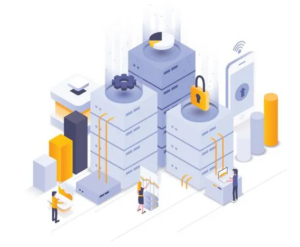
Financial technologies (fintech) offer innovative solutions that digitize various financial services, including payment systems. Payment systems require a sophisticated infrastructure to manage financial transactions reliably, quickly, and securely. In this context, databases become a critical component that forms the foundation of payment systems.
- Speed and Performance: Databases must provide high performance to facilitate the swift execution of payment transactions. The ability to handle real-time transactions and large volumes of data is crucial.
- Security: As financial transactions and payment information are highly sensitive, databases must be equipped with security measures. Security protocols such as data encryption, access control, and authentication should be implemented.
- Wide Coverage: Financial technology platforms often operate on a global scale. Therefore, databases should have the capability to extend across a broad geographical area.
- Scalability: Being able to respond to immediate demands and scale effectively in times of growth is a critical factor in choosing an appropriate database for a payment system.
Popular Database Solutions
- Relational Databases: Traditionally structured and SQL-based, these databases are known for their ACID properties. They are reliable for payment transactions but may have limitations in terms of scalability at times.
- NoSQL Databases: With their flexible structures, they can handle large datasets. They offer high scalability and fast data access.
- In-Memory Databases: By storing data in RAM, they provide fast read and write operations. They are suitable for real-time transactions but are often associated with higher costs.
- Blockchain Databases: Through distributed ledger technology, they provide a transparent and secure structure. They are used to ensure reliability in financial transactions.
Perfect Database Selection: Reliability, Performance, and Innovation
With the advent of digital transformation, payment systems have become central to the daily lives of businesses and consumers. The success story behind these systems is shaped by the right choice of a database. Here are some robust alternatives to consider and the advantages they offer when evaluating databases suitable for payment systems:
1. MongoDB: Flexible Data Structure and High Performance
MongoDB is a NoSQL-based database that focuses on flexible data structures and high performance. Its large data processing capacity, scalability, and JSON-like document database model make it an ideal choice for payment systems. Fast read and write operations enhance its resilience in handling intensive payment traffic.
2. MySQL: Reliable Relational Database Management
MySQL has a strong history in relational database management. Its reliability, ACID compliance, and the ability to handle complex data models make it ideal for managing the complexity of payment systems. Additionally, a broad community and documentation support enable developers to find quick solutions to their challenges.
3. PostgreSQL: Advanced Features and Broad Application Area
PostgreSQL is an open-source relational database management system with advanced features. Standout features include ACID compliance, JSON support, full-text search, and scalability. Its broad application area for payment systems is essential for supporting different payment types and adapting to future expansions.
4. Redis: High-Performance and Cache-Focused Database
Redis, commonly used in payment systems, is a cache-focused database. Its high performance and operation in memory make it a preferred choice, especially in payment systems where transaction speed is critical. Through cache management, it provides quick access to frequently accessed data.
5. Cassandra: Distributed and Scalable Data Storage
Cassandra is a distributed and scalable NoSQL database. In payment systems with large volumes of data traffic, Cassandra’s parallel and distributed processing capabilities provide a significant advantage. Additionally, it ensures high durability, contributing to the continuous operation of systems.
In conclusion,
Payment systems in financial technologies rely on powerful databases optimized for performance, security, and scalability. A carefully selected database tailored to the needs of businesses ensures the smooth operation of payment systems, enhancing customer satisfaction, and providing a competitive advantage. Innovative technologies and databases designed in accordance with security standards contribute to the efficient and secure management of financial transactions.
Eticsoft and Financial Innovation: Reliable Payment and Database Solutions with Sanal pos pro
In the rapidly evolving landscape of financial technologies, robust solutions form the foundation of payment systems. In this context, Sanalpospro developed by Eticsoft not only offers a reliable payment infrastructure but also works seamlessly with databases, providing a comprehensive solution.
Sanal pos pro combines innovative technologies and high-security standards to effectively manage financial transactions. It stands out with its user-friendly interface, reliable payment infrastructure, and integrated database management.
Eticsoft’s Sanal pos pro product offers a powerful payment gateway solution designed to meet the needs of businesses. Its integrated approach to working with databases strengthens payment systems, providing advantages not only in secure payments but also in effective data management.
Database selection is the key to success in financial technologies. In this context, Sanal pos pro offers a reliable, performant, and scalable payment solution. Simultaneously, it enables businesses to manage their payment systems more effectively with integrated database management.