
NFC (Yakın Alan İletişimi) Teknolojisi: Yakın Mesafe İletişimi ve Dijital Dönüşümün Anahtarı
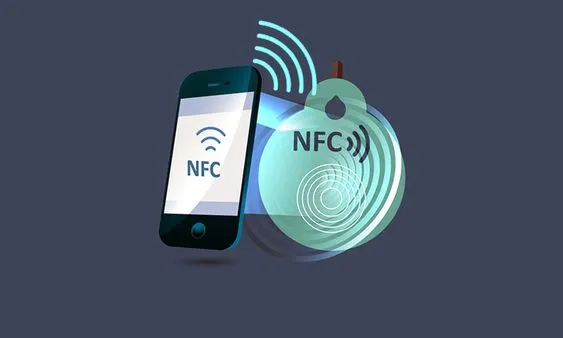
With today’s technological developments, communication forms between people and objects are continuously evolving. NFC or Near Field Communication, an important example of this evolution, stands out as a transformation key in the digital world. NFC (Near Field Communication), a wireless communication technology, enables data exchange between electronic devices. Fundamentally, it is known for its ability to establish a fast and reliable connection between mobile devices, smart cards, and other electronic devices by focusing on “near field” communication due to the very short distance between two devices. In this article, we will examine NFC’s basic features, application areas, and future potential.
What is NFC and How Does it Work?
- NFC is a wireless communication technology that provides data transmission over very short distances using radio waves. This technology requires devices to be very close to each other, ensuring secure and fast communication. At its core, NFC has the ability to exchange data through electromagnetic fields.
NFC Microchip:
- NFC begins with an antenna and a microchip that acts as a receiver within the device. This microchip has the ability to interact with radio frequency.
Reader/Writer:
- NFC devices have a reader/writer component that allows access to data. This component scans NFC devices to perform data transfer.
NFC Software Application:
- There is a software application that manages and can use data received by the NFC microchip in the device. This application provides functionality by interpreting interactions with NFC.
Information or Communication Service Provider:
- There is an information or communication service provider (ISP) that manages all device communications. This regulates data exchange of NFC devices and provides a secure communication environment.
Application Areas:
- Mobile Payments: NFC is used for smart phones to perform payment transactions. Users can make payments by simply touching their phone to a POS device without physically entering credit card information.
- Smart Cards: NFC technology is used through smart cards in secure access control systems and public transportation systems.
- Data Transfer: The ability of two NFC-enabled devices to transfer data quickly and easily by touching each other is widely used, especially for file sharing.
- Healthcare Services: NFC can be used in healthcare sector applications such as patient information management and identity verification.
- Industrial Automation: NFC can be used in equipment identification and configuration in industrial automation systems.
Future Potential and Innovation:
NFC’s future potential is quite broad. The practical solutions this technology currently offers in the digital world can host more complex and integrated applications in the future. Especially when combined with IoT (Internet of Things), NFC’s role in inter-object communication is of great importance. Accordingly, as Eticsoft, in our SANAL POS PRO software, by incorporating NFC features such as mobile wallet integration, interactive advertising, meeting and event management, smart payment terminals with advancing technology; in our collaborations with payment institutions and banks (which you can access here), we can say that we believe this technology will be a very positive and significant convenience. If we examine these features in a bit more detail:
- Mobile Wallet Integration: NFC, when integrated with mobile wallet applications, offers customers the opportunity to make payments using their digital wallets. This is important in terms of providing customers with various payment options and improving shopping experience.
- Interactive Advertising: NFC tags, when integrated with in-store products or display windows, can provide customers with more information about products or opportunities to participate in various campaigns.
- Meeting and Event Management: At events or conferences, you can speed up registration processes and offer interactive experiences by providing participants with NFC-supporting cards or wristbands.
- Smart Payment Terminals: NFC can be used to create smarter and more flexible payment terminals instead of traditional POS terminals. With an NFC-enabled terminal, customers can make faster and smoother payments.
Difference Between NFC and RFID:
NFC is an extension of RFID but works with two-way communication capability at a much shorter distance. RFID is unidirectional and works at a specific frequency, while NFC operates at 13.56 megahertz frequency. NFC’s ability to allow more complex interactions has increased its usage in daily life.
Security and NFC:
NFC is an evolved form of RFID technology equipped with microchips capable of encryption. Especially when used in payment systems, it ensures encrypted information is transmitted securely. In contactless payment transactions, NFC’s security protocols work effectively to protect user data.